Everything your team needs to watch vendor reliability
PulsAPI puts every cloud service your team depends on in one place: live alerts, 90-day SLA analytics, and 26+ integrations to the tools you already use.
Built for teams who ship on other people's APIs
From a solo devops engineer to an enterprise SRE org, the same vendor feed covers detection through compliance.
Unified Status Dashboard
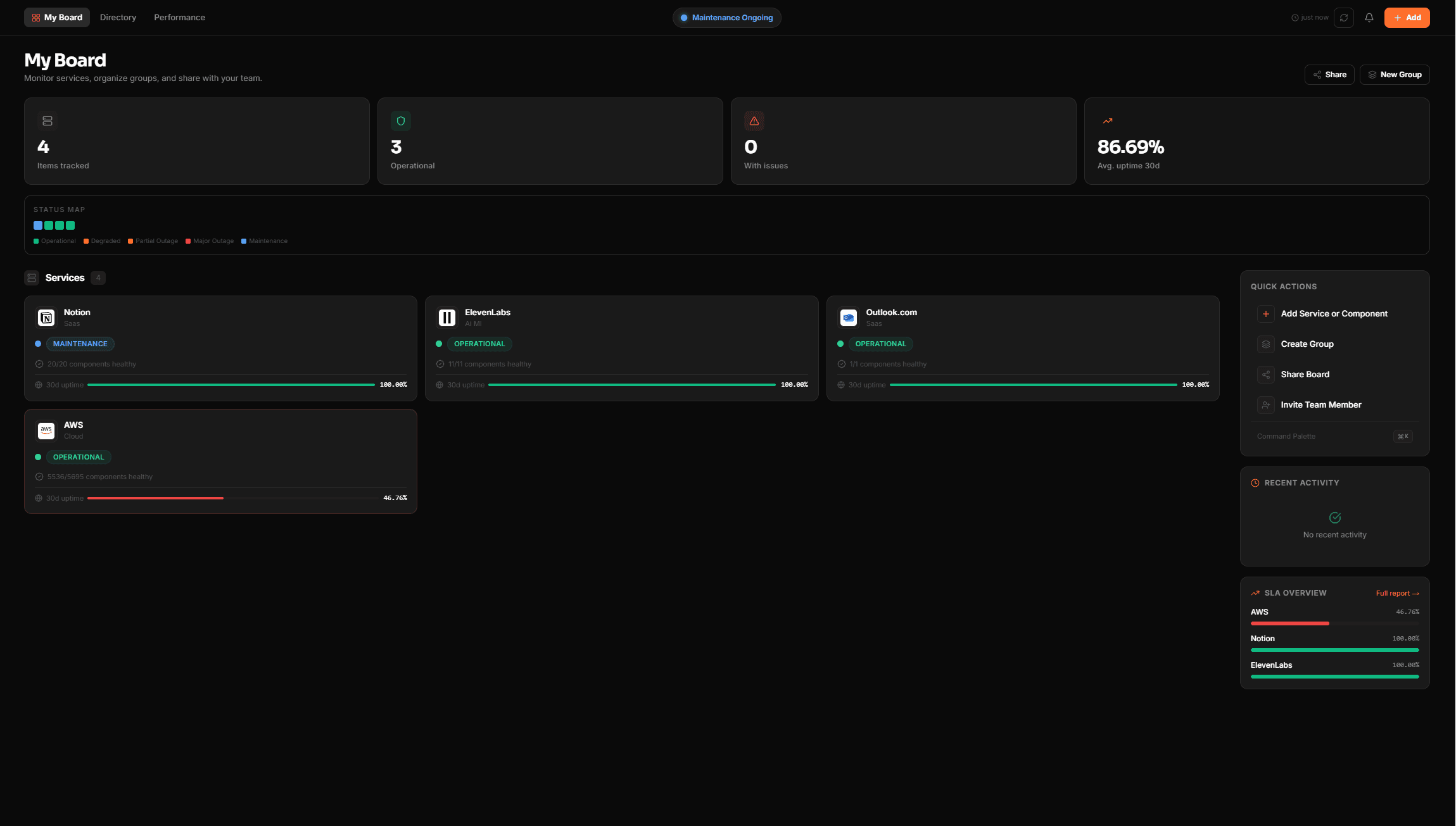
Watch 2463+ cloud services (AWS, GitHub, Stripe, Vercel, and the rest) on one real-time dashboard instead of opening a tab per vendor.
Auto-Discovery of Your Stack
Connect a read-only AWS role or a fine-grained GitHub token. PulsAPI reads your tagged cloud resources and production dependency manifests, then proposes the vendors you depend on, each with the line of evidence that found it. Nothing is monitored until you approve it.
Instant Alert Routing
Vendor incidents usually show up within 60 seconds. Route alerts to Slack, Discord, Teams, PagerDuty, SMS, or email before your users notice.
90-Day SLA Tracking
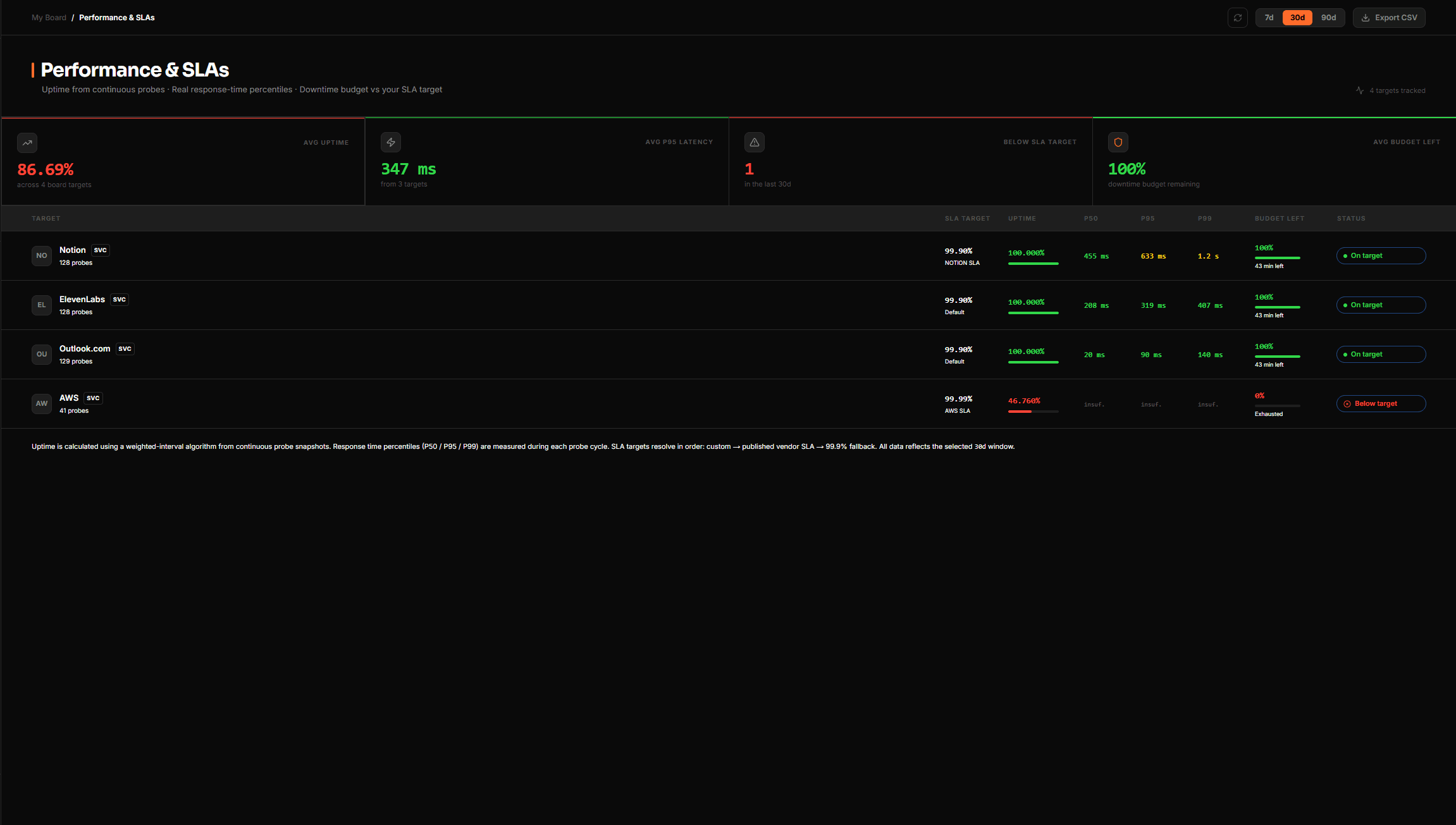
Uptime percentages, downtime budgets, and MTTR per monitored service. Export SLA reports when you need numbers for a vendor review or audit.
26+ Integrations
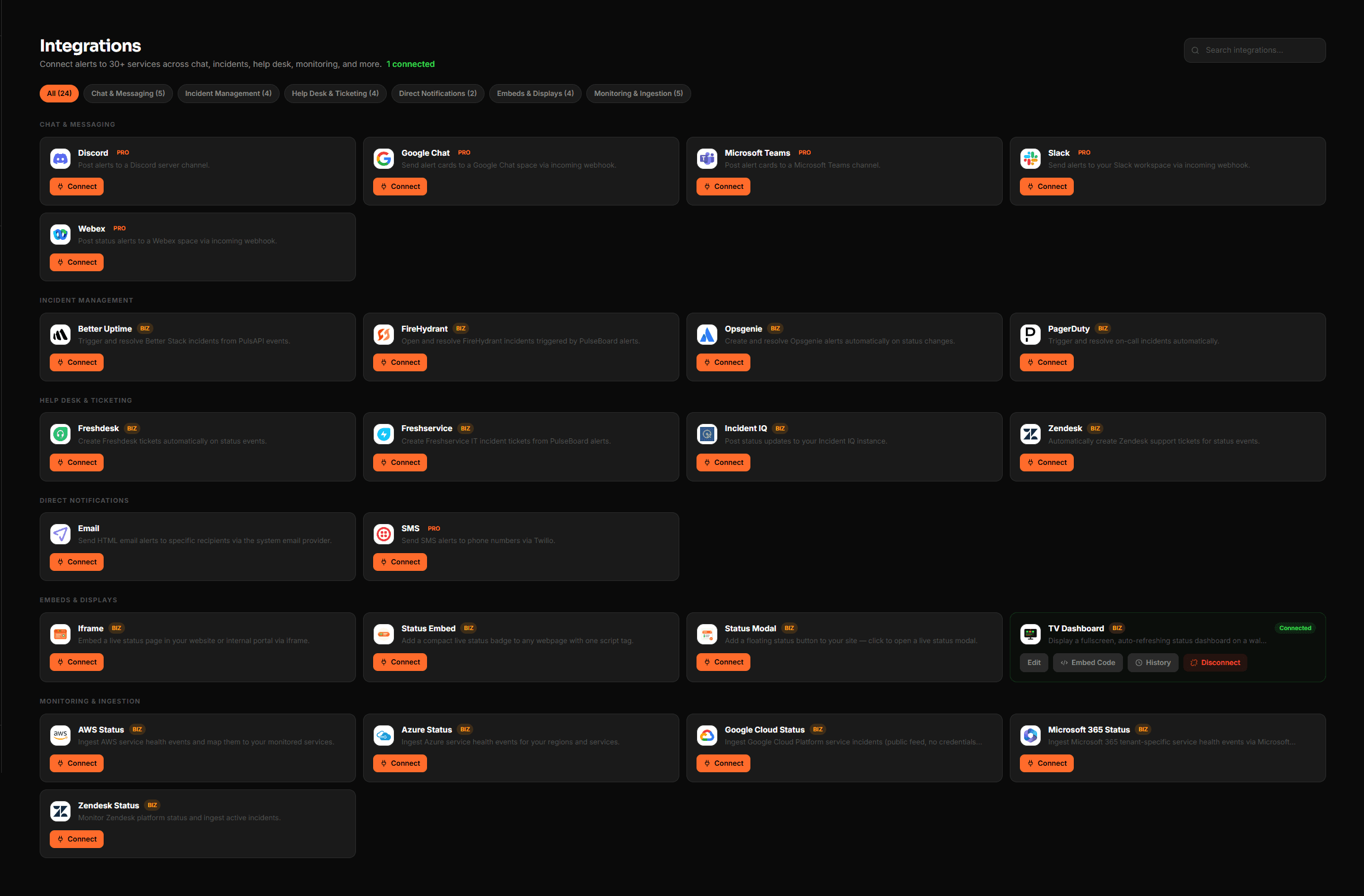
Connect chat, incident management, help desk, monitoring ingestion, and developer APIs from one integrations hub.
Team Collaboration
Invite teammates, assign roles, share custom boards, and work through incidents together instead of forwarding status page screenshots.
Incident Timeline & History
Full history for each vendor incident: start time, duration, affected components, and resolution, going back 90 days.
Status Embeds & Pages
Embed live vendor status on any site via iframe or widget. Run a TV dashboard in the NOC, or push updates to Atlassian Statuspage automatically.
API & Developer Tools
Stream vendor events to your pipeline via the Event Firehose. Query live status from Claude or Cursor through the MCP Server integration.
Stack Impact Intelligence
Map cloud services to business capabilities so you can see which customer-facing features break when a vendor goes down.
Incident Postmortems
Turn resolved major incidents into draft write-ups with TL;DRs, action items, stakeholder notes, and Markdown or PDF export.
Product surface
The product, not a slide deck of screenshots.
Dense when you need signal, quiet when you do not. Below is the actual UI: dashboard, SLA views, and integrations as your team would see them.
How PulsAPI compares
How PulsAPI compares to the tools teams usually evaluate alongside it.
Comparison based on publicly available plans as of 2026. View all comparisons → · What is a status page aggregator? →
How fast are PulsAPI alerts?
PulsAPI polls status pages every 60 seconds while a vendor is moving (and every 5 to 20 minutes while it is stable), then usually delivers alerts in under 4 seconds to Slack, PagerDuty, or email.
What cloud services does PulsAPI monitor?
2463+ services across cloud, dev tools, CI/CD, payments, communication, monitoring, CDN, and SaaS.
Is there a free trial?
Yes. 30-day Business trial, no credit card. It covers every Business feature except AI probes we run and pay for, since those spend on our own provider accounts; you can still run AI probes on your own API key. After that you stay on the free Starter plan.
Start monitoring your vendor stack
Engineering teams use PulsAPI to catch third-party outages before their users do.
No credit card required · 30-day free trial · Cancel anytime